All About Guinea Pigs: Information & Resources

Information and resources


Whether you’re a guinea pig owner, thinking of adopting or simply interested in learning more about these fascinating animals you’re in the right place. Here, you’ll find trusted advice, practical tips, helpful resources, along with fascinating facts to support you in caring for your guinea pigs.

Information and resources


Whether you’re a guinea pig owner, thinking of adopting or simply interested in learning more about these fascinating animals you’re in the right place. Here, you’ll find trusted advice, practical tips, helpful resources, along with fascinating facts to support you in caring for your guinea pigs.

Did you know?


  • Guinea pigs use a range of sounds to communicate! From purring and wheeking to teeth chattering, each vocalisation can convey a different mood or message.

  • Guinea pigs are highly social animals and generally thrive in the company of other guinea pigs. Rabbits are not suitable companions, as their behaviour, communication styles and care needs differ significantly. Rabbits can also carry diseases that may be harmful to guinea pigs.

  • Guinea pigs can be active for up to 20 hours a day! Their natural curiosity means they benefit from plenty of space, enrichment, and opportunities to explore.

Things to consider before getting guinea pigs

Provide a suitable, safe and stimulating living environment


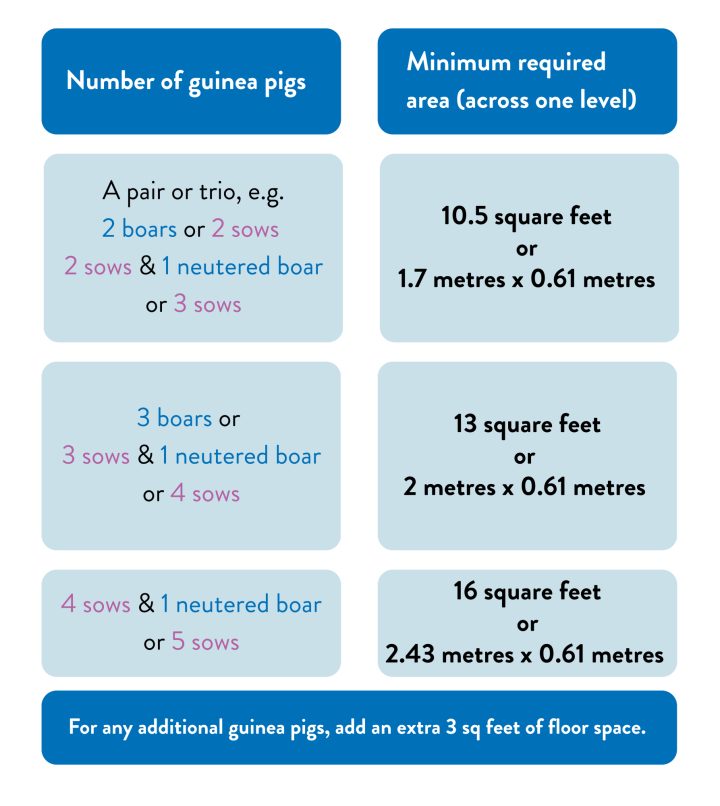
Guinea pigs are curious, social prey animals that need a secure, spacious environment where they can feel safe and express natural behaviours. They require plenty of uninterrupted floor space on a single level, with enclosure size increasing according to the number of guinea pigs housed. Housing should be located in a quiet area away from predators, other animals, young children, draughts and sudden disturbances.

Guinea pigs are sensitive to temperature changes and should ideally be kept at around 15°C. They are best housed indoors, with “C&C” enclosures being a popular option. These spacious, modular enclosures are widely available to buy and can be easily adapted to suit your guinea pigs' needs.

Larger groups may benefit from secure, insulated shed or playhouse conversions that provide ventilation, natural light and protection from adverse weather.

On warm, dry days, guinea pigs can be given access to a secure, predator-proof run for additional exercise and grazing opportunities. Runs should ideally measure at least 1.8 metres × 0.9 metres (6 feet × 3 feet) and have a sturdy lid. They can be purchased or built using good-quality timber and 12 to 16-gauge welded mesh (not chicken wire). Guinea pigs should always be supervised when using outdoor runs to minimise the risk of predators.

Guinea pigs require daily spot cleaning and a weekly full clean. While litter trays filled with hay can help contain some of the mess, most guinea pigs cannot be fully litter trained.

For advice on suitable housing, please contact the Small Animals Team.
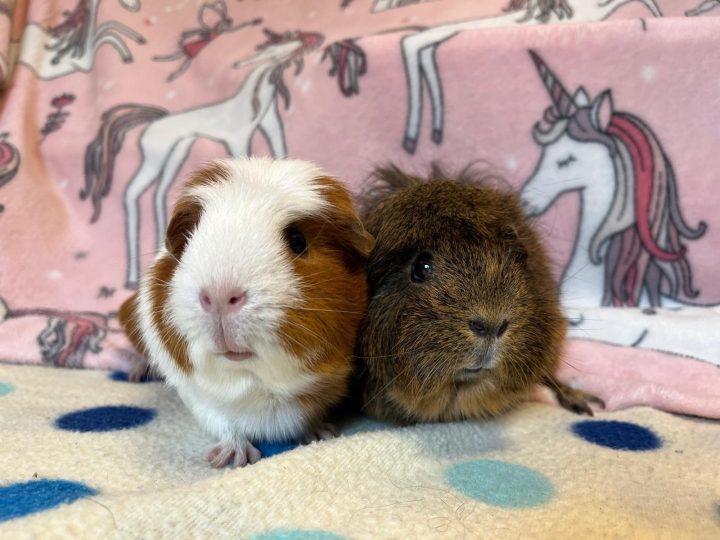
Take a sneak peek inside our guinea pig house

Enrichment


A variety of enrichment should be provided to keep guinea pigs safe, active and mentally stimulated. This may include hides, tunnels, bridges and feeding toys. Exercise wheels and exercise balls should not be used, as they can cause injury to the spine and limbs.

Scroll down to the Downloads and Resources section for DIY enrichment ideas.

A balanced diet


Guinea pigs are herbivores and can consume their body weight in food a day!

Their diet consists of 85% hay, 5% good quality pellets and 10% fresh vegetables.

Hay: Unlimited good-quality hay should be available at all times and should form the majority of the diet. Timothy hay is an excellent feeding hay, while meadow hay can be used for bedding and litter trays. Hay is essential for digestive health and helps wear down continuously growing teeth. Safe natural forage, such as willow and hazel branches, can also help promote natural chewing behaviour and support dental health.

Pellets: Provide a small amount of good-quality guinea pig pellets daily (around 2 tablespoons per guinea pig). Avoid muesli-style foods, as they encourage selective feeding.


Fresh vegetables:
Offer a small handful of fresh leafy greens, herbs and vegetables, such as bell peppers, each day. Guinea pigs cannot produce their own vitamin C, so fresh vegetables are an important part of their diet. Fruit should only be given occasionally as a treat.

Treats and forage: Avoid sugary treats and products containing honey or seeds. Hay, grasses and weeds are the best treat ingredients.

Scroll down to the Downloads and Resources section for our Safe Garden Plants for Guinea Pigs guide.


Fresh water: Clean, fresh water should always be available and changed daily. A heavy ceramic bowl is often preferable to a water bottle as it is more hygienic and allows for more natural drinking.

Learn how to conduct a simple guinea pig health check at home!


Watch the video to find out how to take preventative measures to protect the health of your guinea pigs.

Scroll down to the Downloads and Resources section for our Guinea Pig Health Checklist.

Learn how to conduct a simple guinea pig health check at home!


Watch the video to find out how to take preventative measures to protect the health of your guinea pigs.

Scroll down to the Downloads and Resources section for our Guinea Pig Health Checklist.

Provide appropriate companionship


Guinea pigs are social animals that would naturally live in large herds, so it is important that they have companionship from their own kind.

If you have a lonely guinea pig and are looking for a companion, please get in touch with our Small Animals Team. We can provide bonding advice and information about our bonding service.

The most stable groupings are usually multiple sows or one or more sows living with a neutered boar. Bonded pairs of boars can also work well; however, we recommend pairing boars based on their individual personalities, as some are more tolerant of other males than others. Trios or larger groups of boars should be avoided, as they can become territorial and fight, which may require permanent separation.

Guinea pigs should not be housed with other small animals, such as rabbits, chinchillas or poultry, due to the risk of injury and the transmission of disease.

About Guinea Pig Bonding Service Download Bonding Guide

Prey animals


As prey animals, guinea pigs are naturally wary of potential predators, loud noises and sudden movements. To help them feel secure in their new home, they should be provided with plenty of enrichment and hiding places where they can retreat if frightened. For this reason, some nervous guinea pigs may not be well suited to homes with young children, as they often require a calmer environment to build confidence and express their natural behaviours.

Downloads and resources

For more information and helpful resources, visit GPA (Guinea Pig Alliance) to help you care for your guinea pigs.

Adopting guinea pigs from Raystede

Adopting through a rehoming centre can take a little extra time and patience, but the rewards are worth it.

Meet Albert, who is one of our most heartwarming transformations.

When Albert arrived at Raystede, he was nervous, underweight and suffering with painful patches of dry skin and sore joints.

At Raystede, we don’t just rehome animals, we rehabilitate them first, giving the best chance at a happy and healthy life. From healthcare to behavioural therapy, every step of their journey is carefully guided so they can trust again.

You can make a difference. A gift today will help make sure we can continue to care for all our animals, giving them the love and care they deserve.

Donate