Whether you’re a guinea pig owner, thinking of adopting or simply interested in learning more about these fascinating animals you’re in the right place. Here, you’ll find trusted advice, practical tips, helpful resources, along with fascinating facts to support you in caring for guinea pigs.
XXXXXXXXXXXXXXX
XXXXXXXXXXXXXXX
XXXXXXXXXXXXXXX
Whether you’re a guinea pig owner, thinking of adopting or simply interested in learning more about these fascinating animals you’re in the right place. Here, you’ll find trusted advice, practical tips, helpful resources, along with fascinating facts to support you in caring for guinea pigs.
XXXXXXXXXXXXXXX
XXXXXXXXXXXXXXX
XXXXXXXXXXXXXXX
Caring for guinea pigs can be fun and very rewarding, but it is a big responsibility and a long-term commitment.
Guinea pigs are sensitive to temperature changes and should ideally be kept at around 15°C. They are best housed indoors, with C&C enclosures being a popular option due to their flexibility and ability to provide adequate space. For advice on suitable housing, please contact the Small Animals Team. Larger groups may benefit from secure, insulated shed or playhouse conversions that provide ventilation, natural light and protection from adverse weather.
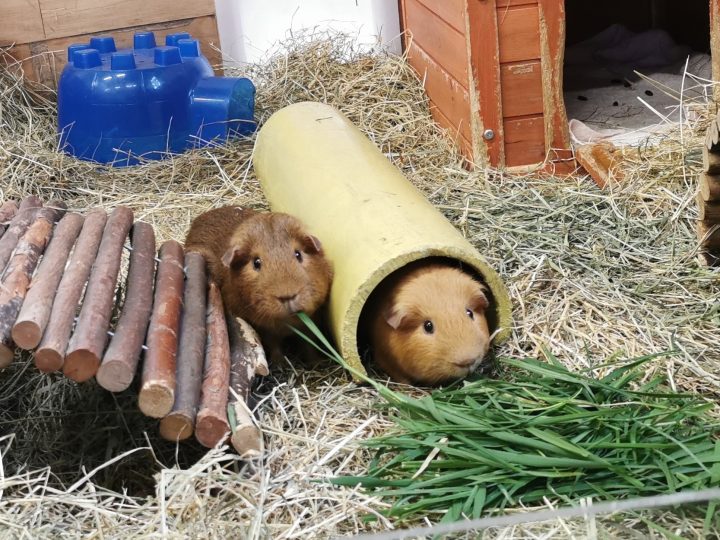
The enclosure should be large enough to allow exercise and exploration, with safe access to hides, tunnels, bridges and feeding toys to provide mental stimulation and a sense of security. Avoid steep ramps, exercise wheels and exercise balls, as these can cause injury.
When given outdoor access, guinea pigs should use a secure, predator-proof run, ideally measuring 6ft × 3ft, and be supervised whenever possible. Guinea pigs are not very tidy animals, so good welfare also requires daily spot cleaning and regular deep cleaning, while providing appropriate bedding and hay-filled litter areas to encourage natural behaviours.
The enclosure should be large enough to allow exercise and exploration, with safe access to hides, tunnels, bridges and feeding toys to provide mental stimulation and a sense of security. Avoid steep ramps, exercise wheels and exercise balls, as these can cause injury.
When given outdoor access, guinea pigs should use a secure, predator-proof run, ideally measuring 6ft × 3ft, and be supervised whenever possible. Guinea pigs are not very tidy animals, so good welfare also requires daily spot cleaning and regular deep cleaning, while providing appropriate bedding and hay-filled litter areas to encourage natural behaviours.
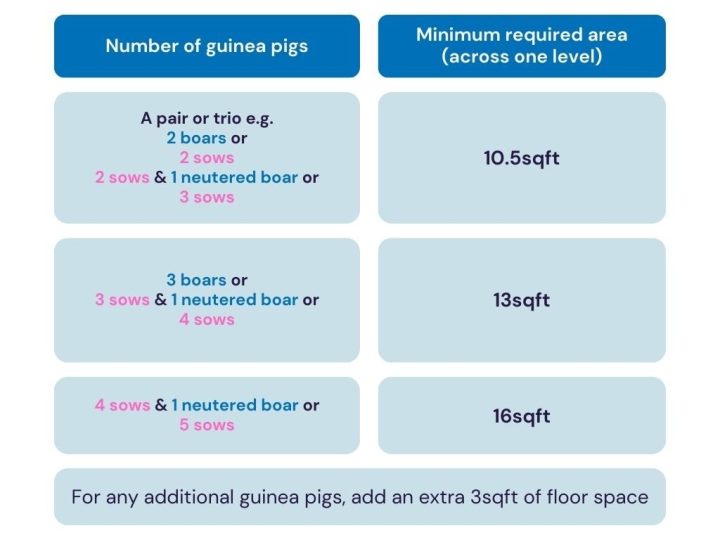
Guinea pigs can be curious and comical animals, but it is important to remember that they are prey animals and can be easily startled, providing them with a secure and spacious enclosure away from other animals and young children is important to make them feel comfortable. Guinea pigs require plenty of unbroken floor space on one level to keep them active and healthy. The amount of space you need to provide will depend on how many guinea pigs are in the herd, please see the table for our minimum size requirements.
Guinea pigs are sensitive to temperature changes and drafts, they should ideally be kept at temperatures of around 15 °C which means that it is not suitable to keep them outdoors in the cold months (October - April). Guinea pigs benefit from being kept predominantly indoors with access to an outdoor enclosure or run on warm, dry days. Outdoor hutches can be used during the warmer months, providing they can be moved indoors to avoid cold, wet weather.
Guinea pigs can be curious and comical animals, but it is important to remember that they are prey animals and can be easily startled, providing them with a secure and spacious enclosure away from other animals and young children is important to make them feel comfortable. Guinea pigs require plenty of unbroken floor space on one level to keep them active and healthy. The amount of space you need to provide will depend on how many guinea pigs are in the herd, please see the table for our minimum size requirements.
Guinea pigs are sensitive to temperature changes and drafts, they should ideally be kept at temperatures of around 15 °C which means that it is not suitable to keep them outdoors in the cold months (October - April). Guinea pigs benefit from being kept predominantly indoors with access to an outdoor enclosure or run on warm, dry days. Outdoor hutches can be used during the warmer months, providing they can be moved indoors to avoid cold, wet weather.
How Raystede helps guinea pigs build lifelong bonds
Their diet consists of 85% hay, 5% good quality pellets and 10% fresh vegetables. Their diet should consist of.
Hay: the best diet consists almost entirely of good quality hay and dried grass forages; an unlimited amount of hay should be available. at all times. They love to graze and will chose the best strands of hay to consume, old hay should be removed daily and replaced with fresh.
Not all hays are created equal, there are different qualities and types of hay available including meadow, Timothy, oat, orchard, and alfalfa.
Their diet consists of 85% hay, 5% good quality pellets and 10% fresh vegetables. Their diet should consist of.
Hay: the best diet consists almost entirely of good quality hay and dried grass forages; an unlimited amount of hay should be available. at all times. They love to graze and will chose the best strands of hay to consume, old hay should be removed daily and replaced with fresh.
Not all hays are created equal, there are different qualities and types of hay available including meadow, Timothy, oat, orchard, and alfalfa.
Meadow hay: ideal for bedding and litter trays as it is cheap and palatable, timothy hay is the best feeding hay as it is very tasty and more fibrous to help keep teeth trim. Oat and orchard hays can be provided alongside feeding hays as an additional treat. Alfalfa should only be provided to poorly, young, or pregnant lactating mothers due to the high calcium and protein content. Guinea pig's teeth grow continuously throughout their life and chewing hay or grass is the best way to keep their teeth short.
Pellets: good quality guinea pig pellets with grass or hay as the main ingredient can be provided daily, we recommend 2tbsp per guinea pig daily. Muesli mixes should be avoided as they often contain unsafe and unhealthy ingredients and promote selective feeding
Treats: Commercial treats can be high in sugar or contain unsafe or unhealthy ingredients, these should be avoided to reduce the risk of obesity and diabetes in your guinea pigs. The best commercial treats should have hay, grasses, or weeds as their main ingredients. Any treats with seeds and honey should be avoided.
Fresh vegetables and fruits: a small handful per guinea pig of fresh leafy herbs and greens, celery and bell peppers is important to provide them with enough vitamins and minerals to keep them healthy. Guinea pigs cannot produce their own vitamin C which plays an important part in immune systems and maintaining bone condition, so they rely on the fresh part of their diet for this vitamin. Natural forage such as willow and hazel branches are great for guinea pig's teeth, and safe washed weeds such as dandelion, sow thistle and red clover can be a tasty alternative to fresh vegetables. Please be careful when picking weeds as some plants are toxic to guinea pigs. Many lettuces are safe for guinea pigs including romaine, butterhead and little gem, however, iceberg lettuce should be avoided. Safe fruits can be provided occasionally as treats but too many sugary fruit and vegetables can lead to obesity and kidney problems. If you would like a list of safe vegetables, fruits, and weeds, please contact the Small Animals Team,
Fresh water: should always be available and changed daily. Providing water in a heavy ceramic bowl is recommended rather than water bottles, as bowls are more hygienic, allow for more efficient drinking and are less likely to leak or maiminction
Watch the video to find out how to take preventative measures to protect the health of your guinea pigs.
Guinea
pigs are social animals and would naturally live in large herds, so it is
important that they have companionship from their own kind. If you are looking
for a companion for your guinea pig. Raystede provides bonding guides and a
bonding service please ask the Small Animals Tear for more information. The
most stable bonds are between multiple sows, or one or more sows with one
neutered boar. Bonded pairs of boars can work in many cases however we
recommend pairing boars based on their personalities as some individuals are
more tolerant of other boars. Trios or larger herds of boars should
be avoided as they can become territorial and fight, which requires permanent
separation. Guinea pigs are not suited to living with other small animals such
as rabbits, chinchillas, or poultry due to the risks of zoonotic diseases and
the risk of injuries. It is normal within herds to have dominant and
subordinate individuals, normal interactions can consist of mounting. teeth
chatting. rumble strutting, and grooming.
As prey animals, guinea pigs are naturally fearful of potential predators, loud noises, and sudden movements To make them feel secure in their new home, they require enrichment such as multiple hides, wooden bridges, tunnels, and big piles of hay so they can hide if they become scared. For this reason, nervous guinea pigs may not be suited to live with younger families as they require a calmer environment to gain confidence and express their natural behaviours.
Enrichment can be homemade from cardboard boxes, tubes or treats in paper bags. As guinea pigs are not good climbers, enrichment should be floor level and easily accessible. Safe wooden enrichment items are ideal as they can help keep teeth trim and edible toys made from willow, water hyacinth and grasses are readily accepted.
When Albert arrived at Raystede, he was nervous, underweight and suffering with painful patches of dry skin and sore joints.
At Raystede, we don’t just rehome animals, we rehabilitate them first, giving the best chance at a happy and healthy life. From healthcare to behavioural therapy, every step of their journey is carefully guided so they can trust again.
You can make a difference. A gift today will help make sure we can continue to care for all our animals, giving them the love and care they deserve.
Donate